
Repairs To Galvanized Steel
The hot dipped galvanized coating not only provides a high level of corrosion protection but is also very robust, such that it will normally withstand even the roughest of handling. However, the coating may occasionally be subject to small areas of mechanical damage typically as chips at edges or corners when hung during the galvanizing process or from being mishandled. In such instances it may be necessary to repair the galvanized coating.
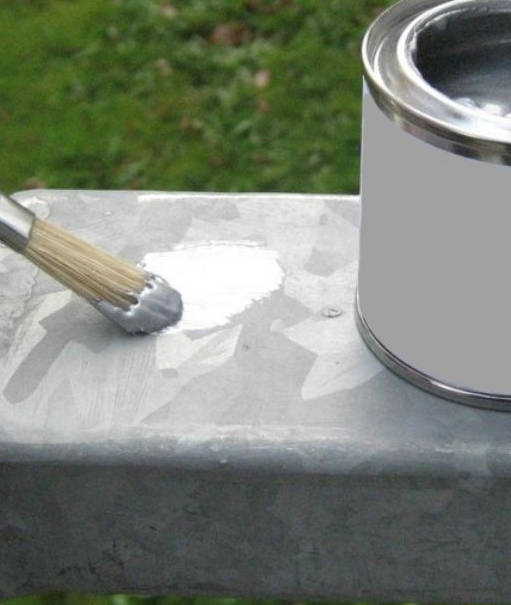
Repair To Galvanizing
Where an article is subject to damage or bare patches, the galvanized coating repair should be conducted in line with the requirements of BS EN ISO 1461:2022 which are summarized below:
- The total uncoated areas for renovation by the galvanizer shall not exceed 0.5% of the total surface area of the article.
- Each uncoated area for renovation shall not exceed 10 cm² (e.g. 2 cm × 5 cm).
- Larger areas may be repaired by agreement with the customer; otherwise the article should be regalvanized.
- The repair coating on the renovated areas shall be capable of giving sacrificial protection to the steel to which it is applied.
- Repairs to the affected area should be carried out with an application of a good quality zinc-rich paint.
- The repair coating thickness on the renovated areas should have a minimum average thickness of 100 μm.
In practice, most repairs are conducted using a zinc-rich paint which might be brush or aerosol applied. It is also common to use a sprayed final top coat to attain a more aesthetic finish. Ideally the product used should contain at least 80% zinc by weight, the key being to follow the manufacturer’s instructions and ensure sufficient coatings are applied to achieve the 100 μm repair coating thickness requirement of BS EN ISO 1461:2022.
For a more detailed Galvanizing Renovation Procedure contact our Design team